Business resources · Financing considerations
Business Financing Resources for Manufacturers and Industrial Businesses
Production growth can tie up cash in machinery, raw materials and work in process before finished goods generate collected revenue. Separate the financing need into equipment, operating liquidity and property so the repayment structure can be considered against the way the business earns cash.
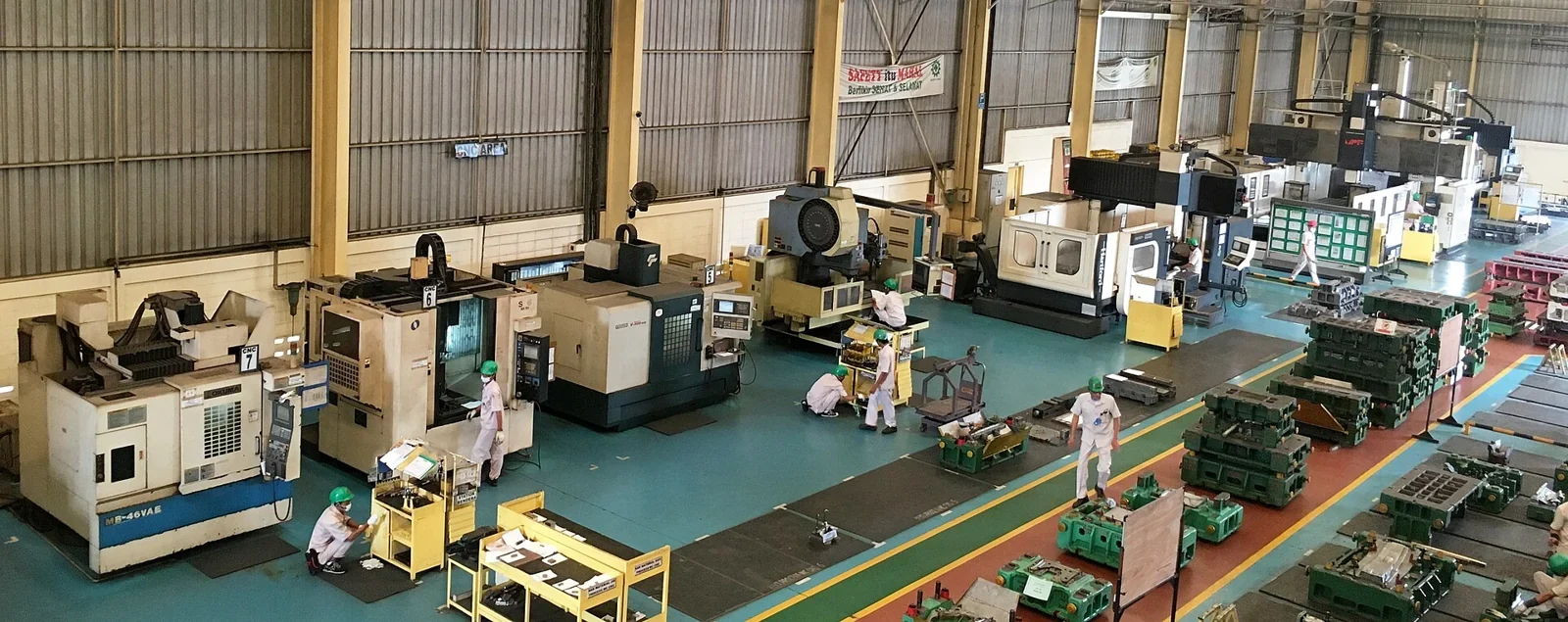
Image credit and usage rights
Antoniusaw · CC BY-SA 4.0. Resized and converted to WebP; Adapted image remains available under CC BY-SA 4.0.

Educational categories for discussion. Availability through Montridge has not been established for every category. Any potential referral is subject to confirmation of authority, provider, product, business activity and location.
Start with the business need
Machinery and production equipment
A production line may involve more than the purchase price: delivery, installation, tooling, training and commissioning can affect the cash required. Ask which costs and equipment types a provider will consider. Specialized, custom-built or used machinery should not be assumed eligible.
Inventory and raw materials
Larger orders can increase inventory and work-in-process balances before collection. Review supplier deposits, production lead times, customer concentration and acceptance terms. An order forecast is different from a firm order, and neither eliminates performance or payment risk.
Customer-payment timing
A business selling on terms may have a profitable order book and still face a cash gap. Separate current approved invoices from disputed, overdue or conditional receivables. Consider how delayed collection or rejection of a batch would affect scheduled financing payments.
Production expansion and facility improvements
New capacity can create additional payroll, utility, maintenance and compliance costs during ramp-up. Distinguish tenant improvements from acquiring an owner-occupied building. Property financing, equipment financing and day-to-day liquidity serve different needs and should not be treated as interchangeable.
Compare potential financing structures
| Structure | Possible purpose | Questions to resolve |
|---|---|---|
| Equipment financing or leasing | Machinery and production assets | Eligible equipment, installation costs, useful life, security, maintenance and end-of-lease terms. |
| Working-capital line of credit | Raw materials, payroll and collection timing | Availability when needed, renewal conditions, repayment frequency and the effect of a production interruption. |
| Receivables or asset-based financing | Potentially eligible invoices or inventory | Borrowing-base rules, customer concentration, inventory valuation, reporting and competing liens. |
| Term financing | A defined expansion or improvement expenditure | Repayment during commissioning, realistic production ramp-up and the complete financing cost. |
| Property or SBA-related financing | An eligible owner-occupied facility or other permitted business use | Occupancy, permitted use, environmental review and program-specific underwriting; confirm the actual business and project. |
Keep the production plan and risk review connected
A financed machine may change property values, equipment-breakdown exposures and production dependencies. A new process or facility can also change fire protection, environmental or product risks. Review the insurance implications separately from the financing decision. Borrowing supplies capital; it does not establish insurance coverage or eliminate the operational consequences of downtime.
Examine the cost and the obligations
Compare the written terms with a realistic cash-flow forecast, including a slower-payment or lower-revenue scenario. A lower periodic payment does not establish a lower total cost. Ask a qualified financing professional to explain:
- Net proceeds after fees, the total repayment amount and every charge included in the transaction.
- Payment amount, frequency, term and whether payments continue during an interruption or delayed collection.
- Personal guarantees, collateral, lien priority, default provisions and any restrictions on additional borrowing.
- The written early-payoff calculation, including fees or charges that remain due. Do not assume paying early reduces all charges.
- For a lease, purchase options, residual obligations, return conditions and end-of-term costs.
A factor rate is not an interest rate or an annual percentage rate (APR). Ask for a complete explanation of cost using the actual fees, payment dates and repayment structure. Do not compare a factor rate directly with an annual interest rate.
Prepare for an initial discussion
- General purpose, business location, approximate funding need and target timing
- Machinery description and major installation or commissioning costs
- A summary of order, production and customer-payment cycles
- Existing debt and lien information, plus a facility occupancy summary where relevant
Start with basic business contact information and a general description of the need. Do not send Social Security numbers, bank logins, bank statements, personal credit records, guarantees or confidential customer documents through website, calendar or ordinary inquiry fields. If a referral is later agreed, confirm the recipient and a secure exchange process first.
Montridge’s potential referral role
Montridge Insurance Services, Inc. is an independent insurance brokerage. For this resource, Montridge provides general educational information and can discuss whether an independent referral may be appropriate, subject to verification of its authority and the applicable arrangement. Montridge is not the lender, bank, financing underwriter or credit decision-maker and does not set financing terms or promise approval.
If a referral becomes available and you choose to proceed, Montridge will identify the recipient, explain the applicable relationship and any referral compensation, and obtain your authorization before transferring information. Montridge may receive compensation under an applicable referral arrangement. An inquiry is not a credit application, credit authorization, approval or commitment to lend. Insurance and financing decisions remain separate.
Frequently asked questions
Is every type of industrial machinery financeable?
No eligibility assumption should be made. The equipment, age, use, resale characteristics and provider criteria need review.
Should equipment and working capital use the same structure?
They may have different cash cycles and security requirements. Compare the useful life of the asset with operating cash needs and repayment obligations.
Does financing address business interruption risk?
Financing and insurance answer different questions. Debt payments may continue during downtime, so review both cash-flow resilience and applicable policy wording.
Is every structure described here available through Montridge?
No availability is promised. These are educational categories. Current provider access, referral authority and the business’s eligibility must be confirmed separately.
What should I share when I contact Montridge?
Share basic business contact details, the general purpose and timing of the need. Do not upload or send sensitive financial or identity documents in an initial inquiry.
Keep the insurance review connected
Official background resources
Background sources checked November 15, 2026. Consult current official guidance and qualified professionals for the actual transaction. This page provides general education, not a recommendation to borrow or legal, tax or individualized financial advice.
Discuss the business need
Bring the purpose, timing and general business circumstances to a conversation.